L sealer machine UK
Compare automatic, semi-automatic and tunnel-based L sealer routes.
Specification guide
A structured specification checklist helps compare quotations and avoid buying an L sealer that does not fit the products or site.
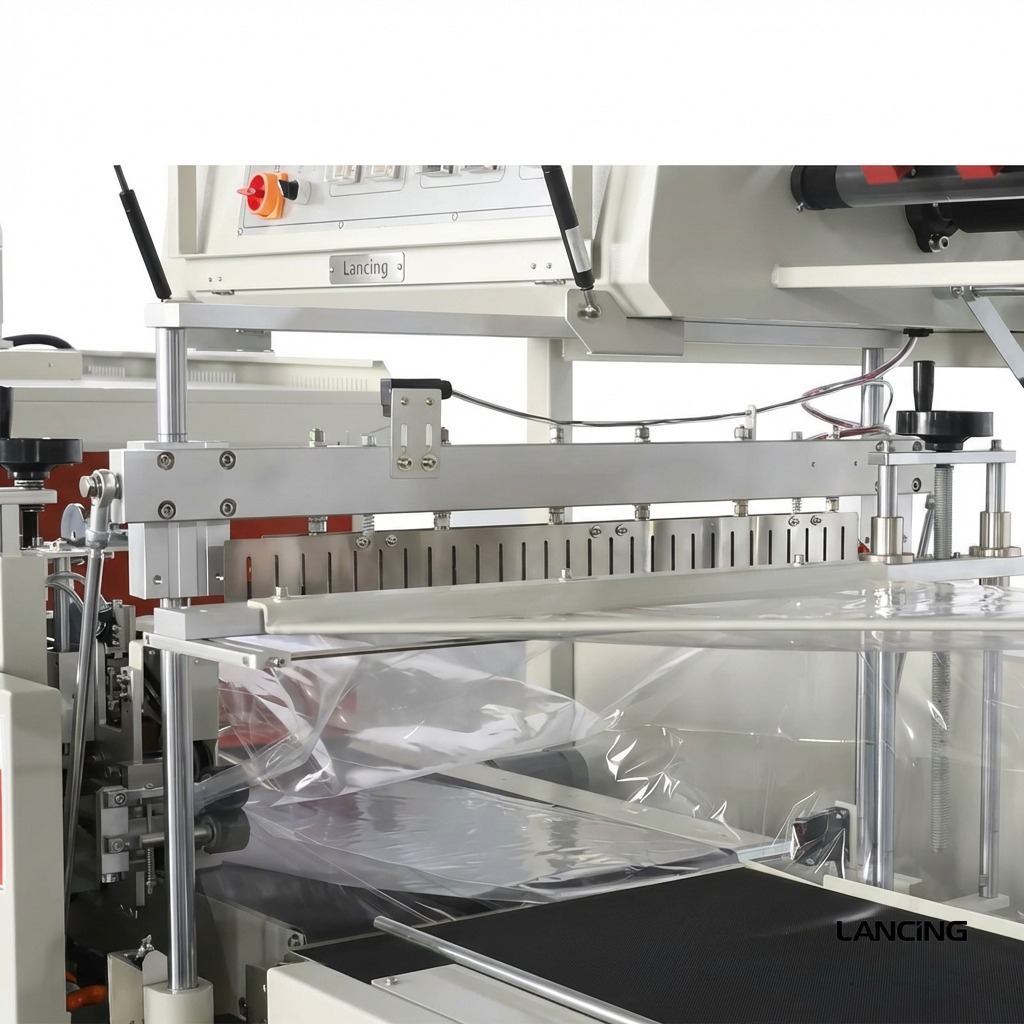
A structured specification checklist helps compare quotations and avoid buying an L sealer that does not fit the products or site.
The checklist turns a vague machine enquiry into a practical specification. It helps suppliers recommend equipment that fits the application.
Compare what each quotation includes: sealer, tunnel, conveyors, installation, training, spares and support.
| Pack dimensions | Largest and smallest product sizes, pack weight, stability and whether products are single cartons, bundles or trays. |
|---|---|
| Required output | Target packs per minute, daily volume, shift length, changeover frequency and whether future output may increase. |
| Film and finish | Preferred shrink film if known, presentation requirements, seal position, retail display needs and barcode visibility. |
| Line layout | Available floor space, infeed method, conveyor height, power, compressed air and whether a shrink tunnel is needed. |
FAQ
Yes, especially for the largest, smallest and most common pack sizes.
Yes. Photos show pack stability and presentation requirements.
Yes. It is designed to help prepare a better enquiry.
Related pages
Use these pages to compare L sealers, shrink tunnels, film route and quotation requirements.
Compare automatic, semi-automatic and tunnel-based L sealer routes.
Review automatic sealing and shrink wrapping options for higher output lines.
Understand when a combined sealer and tunnel route is the best fit.
Compare L sealers, chamber machines, tunnels and wider packaging routes.
Prepare product and line details before requesting a quotation.
Send pack sizes, output target and film needs to Lancing UK.
Specification checklist
A useful L-sealer specification records the limits and conditions that affect the finished pack. That includes the largest and smallest product, the film centre-fold width, the tunnel aperture, the operator or conveyor feed method, the target output and the acceptance standard for the finished shrink wrap.
Unsupported figures should be avoided. If a speed, capacity or quality claim is important, it should be linked to product dimensions, film type and test conditions. This is especially important when comparing automatic L sealers with chamber sealers or sleeve sealing routes.
| Selection point | What to confirm | Why it matters |
|---|---|---|
| Product envelope | Smallest, largest and most awkward pack. | Prevents specifying around a single easy sample. |
| Film envelope | Material, thickness, centre-fold width and roll handling. | Controls seal quality and tunnel recovery. |
| Tunnel envelope | Aperture, belt width, airflow, dwell and cooling. | Controls the finished presentation after sealing. |
| Integration envelope | Infeed, outfeed, conveyor height, guarding and access. | Controls how the equipment fits the real line. |
Check utility information before layout planning.
Review space, access and line positioning.
Prepare site information before installation.
The product envelope and film width are usually the starting points because they affect almost every other selection.
It should be specified with the sealer because tunnel behaviour determines the finished pack.
Yes. It is better to leave unknowns blank than to guess; Lancing can confirm what needs checking.
State target packs per minute with the product, film and operator or conveyor conditions where possible.
A reliable specification is tied to samples, dimensions, film details and acceptance criteria rather than unsupported assumptions.
Related guidance: Enquiry checklist · Sample testing · Aftercare