Printed cartons
Review shrink wrapping considerations for printed cartons.
Plan the seal, film and finish around the packs you need to wrap.
Application choice
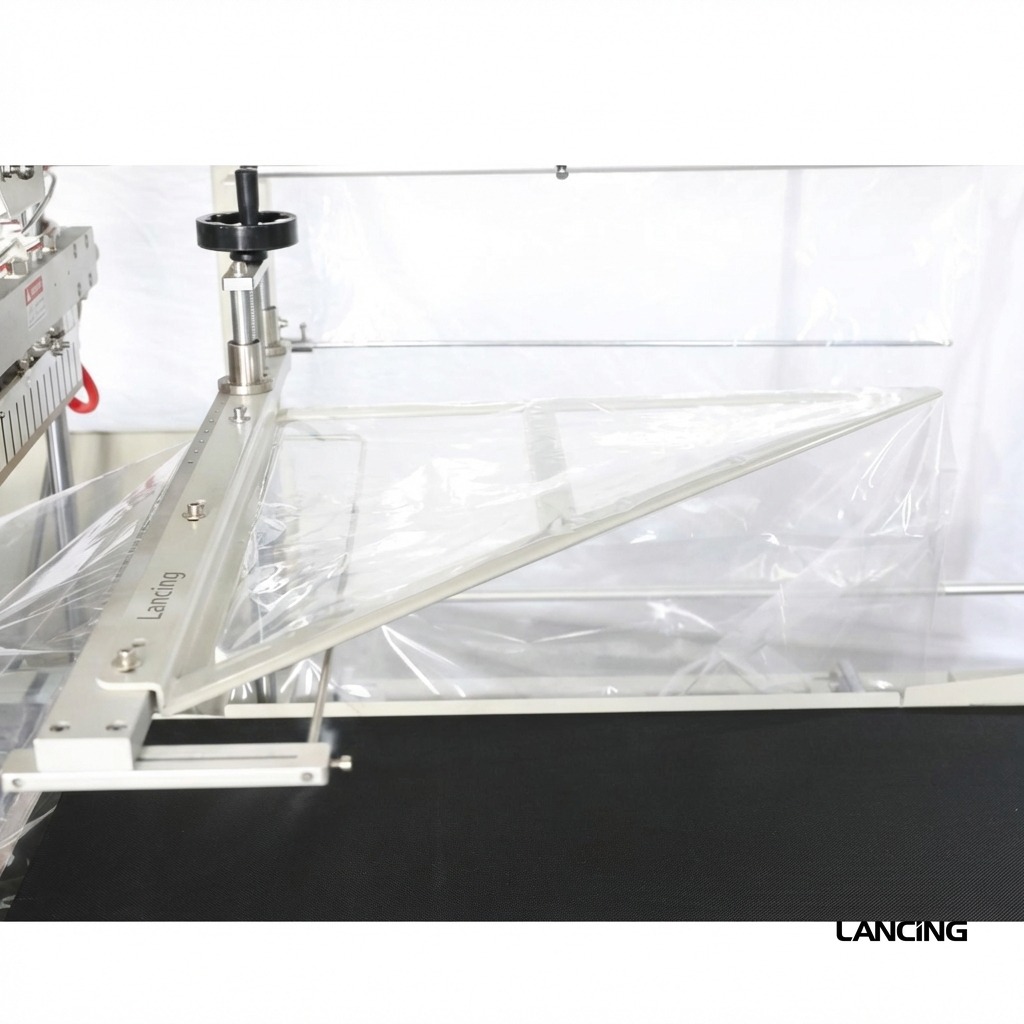
An L-sealer closes film around the product; the following tunnel produces the shrink finish. Assess whether the pack can remain correctly presented through both stages. Product dimensions are necessary, but they do not describe stability, surface sensitivity or the finished appearance.
Trial the most exposed corners, the largest presentation face and the labels or codes that must remain readable. Review the cooled pack under its normal inspection conditions. A satisfactory hot pack at the tunnel exit may look different after cooling and handling.
Observe whether the items remain together before the film has shrunk. If the group moves apart during infeed or sealing, consider the required support, orientation or a different wrapping route. Shrink film should not be assumed to correct an unstable group before the tunnel.
Assess edge support, film clearance and the effect of the complete tunnel exposure on coatings, labels and contents. Include the thinnest format and the most heat-sensitive construction, not only a mid-range carton.
Compare the number of proven settings and change parts required across the actual order mix. Record the material used and time taken between the last accepted pack of one format and the first accepted pack of the next. A long uninterrupted run and frequent small batches are different duties.
Agree appearance, seal position, product condition and code readability before the trial. Compare accepted output after normal cooling and handling rather than treating an empty-cycle figure as a completed-pack rate.
Film and finish
The correct L-sealer route depends on the film, product stability, heat tunnel settings and line speed. A pack may seal well but shrink poorly if tunnel temperature, airflow and conveyor speed are not balanced with the film and product.

Integration
An L-sealer may operate as a standalone packaging cell or as part of a wider line. Infeed, spacing, film loading, shrink tunnel outfeed and finished-pack handling all need to be practical for operators and maintenance.
Application fit
The same L-sealer can behave differently across printed cartons, gift boxes, ecommerce mailer boxes, books, food packs and industrial components. Product shape, heat sensitivity, surface finish and whether the film is for presentation or protection all affect the best route.
Applications should be described by both product type and packing objective. For example, a printed carton may need film clarity and barcode visibility, while a grouped promotional pack may need product stability, accurate infeed spacing and a tunnel finish that holds the pack without distorting it.
| Selection point | What to confirm | Why it matters |
|---|---|---|
| Food and consumer cartons | Confirm heat sensitivity, hygiene expectations and presentation tolerance. | The film and tunnel settings must avoid damaging the product or label. |
| Printed cartons and gift boxes | Check print rub, film clarity, seams and corner finish. | High-visibility retail packs usually need sample approval. |
| Ecommerce and fulfilment | Review short-run changeover, barcode visibility and pack handling. | Mixed SKUs can require flexible settings and operator-friendly changeover. |
| Contract packing | List all pack sizes, batch lengths and changeovers. | The machine route must suit the range, not only the easiest product. |
Review shrink wrapping considerations for printed cartons.
Check L-sealer suitability for ecommerce and fulfilment packs.
Review flexible shrink wrapping requirements for contract packers.
It may be possible, but hygiene expectations, cleaning, film type and changeover procedure need reviewing.
Often they can be, but sample testing should check heat, film clarity, barcode visibility and surface marking.
Changeover, mixed SKU handling, barcode visibility, pack strength and operator simplicity are common priorities.
They can be considered where the box dimensions and finish requirements suit film wrapping and tunnel shrinking.
A SKU list with sizes, batch lengths, film preferences and finish standards helps avoid under-specifying the machine.
Related guidance: Gift boxes · Food cartons · Quote checklist
Application suitability evidence
L-sealing is commonly considered for boxed goods, printed cartons, books, cosmetic gift sets, ecommerce packs and grouped presentation packs. The important decision is whether the product behaves consistently enough for an L-shaped seal and heat tunnel finish.
A different route may be better if the product is very long, unstable, unsupported as a bundle or better suited to a sleeve, flow wrap or wider end-of-line packaging system.
| Point to confirm | What Lancing checks | Why it matters |
|---|---|---|
| Retail cartons | Presentation face, barcode visibility, label area and acceptable corner finish. | Protects the look of the pack after film shrinking. |
| Ecommerce fulfilment | Box variation, daily throughput and operator handling. | Determines whether flexible semi-automatic or automatic feed is better. |
| Gift sets | Product stability, pack depth and heat sensitivity. | Prevents distortion and appearance problems. |
| Contract packing | Changeover frequency and evidence needed for multiple customers. | Controls setup time and trial requirements. |
Check artwork and barcode considerations.
Use samples and video evidence before route selection.
Define the finished appearance needed for each application.
Boxed, cartonised or stable products that can pass through the sealing and tunnel stages without shifting usually suit L-sealing best.
Yes where the goal is a protective or presentation shrink wrap, but box variation and fulfilment flow need checking.
Sleeve sealing may be better for unsupported grouped bottles, trays or transit multipacks.
Useful next step: Send product dimensions, photos, film details and target output through the existing enquiry form so Lancing can check the L-sealer route before quotation.
Application suitability
Application suitability is broader than product dimensions. Labels, coatings, protrusions, internal movement and heat response can change the film choice and may determine whether L-sealing is the correct packaging route.
Direct answer: Labels, inks, varnishes and surface coatings must tolerate the film contact, heat exposure and pressure created during shrinking without lifting, scuffing or losing readability.
A clear film can also change glare and barcode contrast. The finished pack should therefore be checked under the buyer's normal inspection conditions, including cooled samples and any scanner or presentation requirement.
Direct answer: Mixed products can share a recipe only when their film, geometry, thermal response and required finish are sufficiently similar.
A setting that is satisfactory for a rigid small carton may under-shrink a taller pack or overexpose a lightweight product. Where one line handles varied SKUs, the changeover plan should identify which products can share settings and which require a separate approved recipe.
Direct answer: Heat sensitivity can come from the product, its container, adhesive, label, coating, insert or internal component rather than from the outer carton alone.
The relevant question is the effect of total exposure during the real tunnel cycle, not simply the displayed air temperature. Samples should represent the most vulnerable construction and normal starting condition.
Direct answer: Sharp corners and protrusions concentrate stress as the film shrinks, increasing the risk of punctures, whitening or an untidy bridge across the feature.
The solution may involve orientation, film properties, more material around the pack, corner protection, a support tray or another packaging route. A thicker film alone should not be assumed to solve every geometry problem.
Related guidance: Heat-sensitive products · Sharp and irregular packs · Printed film registration
Application proof
Direct answer: L-sealer suitability changes with the product, not just the industry. Cartons, books, trays, gift sets, electronics, food packs and ecommerce boxes can each require different film allowance, orientation, detection, tunnel behaviour and cooling checks even when their basic dimensions look similar.